AAAAAHHHH
I have been really struggling with motivation for revision this week so sorry about the lack of posts, but I double promise to update them every day now!
Being a doctor is all I have every wanted to do, and I wont stop, EVER, but after finishing exam period at uni, and coming home to stay with the family over the summer holidays, Im just finding it hard to get back into the hardcore revision mood again.
This week I have been focusing on the Written Communication section of the GAMSAT.
I did study English Literature at A-Level and that has given me a good grounding in how to structure and write essays; and my Dad would describe me as pretty opinionated, and I LOVE to have a good debate!
What Have I Been Doing?
I have been going through some themes, and then coming up with points, evidence to back my points up, and learning some quotations about really broad themes that I could tweak a little and potentially use in most essays.
Just a little thing I learnt in school like years and years and years ago was to
PEE ALL OVER THE PAGE
Point - make your point
Evidence - provide an example and evidence to back up that point
Explanation - explain what the evidence proves
(Yeah I know it is super simple!)
I thought it might be helpful in structuring the paragraphs in the essays, incase you have a lot of ideas, this will force you to adapt a strict structure to follow in the exam, as you do not have a lot of time!
So far some of the issues I've been essay writing on are:
The inevitability of death - lovely I know, but it's good topic to really let you get your deep thinking cap on.
Wealth and Riches - the whole, can money make you happy, obsession of wealth and riches etc.
Tuesday, 30 July 2013

Monday, 22 July 2013
GAMSAT Revision - Physics
I have just finished the Physics section of my revision for the GAMSAT!
Bearing in mind the last time I studied physics was at GCSE level, for those of you reading and not from the UK that is when I was 16! So a good 4 years ago and the level of Physics they say they expect is A-Level.
Here is an overview of the topics that I have covered for the GAMSAT, when I say covered I mean a basic understanding and being able to use the equations associated, as well as doing practice problems for each of them:
Motion - Including Newtion's Laws of Motion
Velocity, Distance, Speed equations
Change in velocity equations and problems
Distance time graphs and how to use them to solve problems
Centripetal acceleration - understanding what it is, what forces effect it, and equations
F=MA
Tension
SOHCAHTOA - comes in handy for physics problems
Forces on an inclined plane - perpendicular and parallel forces
Work and Energy
Work, Force, Distance triangle
Momentum and its conservation
Gravitational Acceleration
Torque, Force, Distance Equation
Springs - Hookes Law and equations
Harmonic Motion
Fluids - volume of fluid displaced, column of water problems
Density of fluids
Static fluid pressure
Thermodynamics
Magnetism - Coulomb, forces between 2 charges
Electrostatics - Calculating the electric field at a certain point and equations
Circuits - and their components, Ohms Law
Voltage
Capacitance - Calculating the capacitance of a capacitor, charge density, strength of a field
Resistors - in parallel and in series
Joules Law
Waves - properties of different waves, velocity, frequency, wavelength equations
Different types of waves
Construct interference and Destructive interference
Relationships between frequency and wavelength
Diffraction
Dopler Effect and equations
Refraction and Reflection
Radioactive decay - different types and what happens in each of them
Half Life
Bit of a dry post there! :( But I just thought I would write an exhaustive list of what I had covered incase you had no idea where to begin! Oh and all this took me about 2 weeks, on and off revision, not consistent at all because I hate physics!
Now onto chemistry! HUZZAH
Bearing in mind the last time I studied physics was at GCSE level, for those of you reading and not from the UK that is when I was 16! So a good 4 years ago and the level of Physics they say they expect is A-Level.
Here is an overview of the topics that I have covered for the GAMSAT, when I say covered I mean a basic understanding and being able to use the equations associated, as well as doing practice problems for each of them:
Motion - Including Newtion's Laws of Motion
Velocity, Distance, Speed equations
Change in velocity equations and problems
Distance time graphs and how to use them to solve problems
Centripetal acceleration - understanding what it is, what forces effect it, and equations
F=MA
Tension
SOHCAHTOA - comes in handy for physics problems
Forces on an inclined plane - perpendicular and parallel forces
Work and Energy
Work, Force, Distance triangle
Momentum and its conservation
Gravitational Acceleration
Torque, Force, Distance Equation
Springs - Hookes Law and equations
Harmonic Motion
Fluids - volume of fluid displaced, column of water problems
Density of fluids
Static fluid pressure
Thermodynamics
Magnetism - Coulomb, forces between 2 charges
Electrostatics - Calculating the electric field at a certain point and equations
Circuits - and their components, Ohms Law
Voltage
Capacitance - Calculating the capacitance of a capacitor, charge density, strength of a field
Resistors - in parallel and in series
Joules Law
Waves - properties of different waves, velocity, frequency, wavelength equations
Different types of waves
Construct interference and Destructive interference
Relationships between frequency and wavelength
Diffraction
Dopler Effect and equations
Refraction and Reflection
Radioactive decay - different types and what happens in each of them
Half Life
Bit of a dry post there! :( But I just thought I would write an exhaustive list of what I had covered incase you had no idea where to begin! Oh and all this took me about 2 weeks, on and off revision, not consistent at all because I hate physics!
Now onto chemistry! HUZZAH
Friday, 19 July 2013
Last Day of Work Experience! :(
I've just had my day of work experience at the surgery today! :( Nooooo! :( The Dr I've been shadowing has written me a lovely reference letter for me to add to my work experience record that I will need for my interview for Nottingham med school.
I'll just give you an overview of some of the more interesting cases that I've seen in my last few days:
 1- Patient came in with a BAKERS CYST, which is where the joint capsule of the knee joint can burst out into the space behind a knee, with the patient presenting with a large cyst behind the knee. It may be caused by an injury from playing sport or rheumatoid arthritis.
Treatment was undertaken at the local hospital where the cyst was drained using an ultrasounds guided needle as there are major arteries located behind the knee. A steroid was also injected into the knee to provide relief from swelling.

2- It may seem like a boring one but I have never ever actually seen GOUT in a patient before! This elderly came in with gout of the finger! It was looking very swollen and you were able to see yellow crystals underneath the skin. These were uric acid that had crystallized under the skin are are formed under certain conditions such as heat and dehydration which will effect the way the body metabolizes uric acid.
3- a 43 year old overweight male came into the surgery because he wanted to get checked over after an incidence he had on Tuesday afternoon. He said he had been walking his dog and he suddenly got really severe heart burn that radiated down his arm and shoulder and into the back of his throat. When the Dr asked him to described the pain he described it as "dull and heavy" and that was was "sweating buckets", the patient also had to take the following day off work because he was exhausted. The episode lasted for 10 minutes and the patient was convinced it was just bad heartburn.
BUT, from the patients history, smoker, obese and with a family history of heart attacks, and the description of the pain, dull, heavy on the chest radiating down his arm chest and shoulder, I thought the patient had suffered a heart attack and not realized.
The patient was sent for an urgent ECG in the next room and his ECG showed an ST ELEVATION, which is where the ST segment of the heart activity is abnormally high and is a sign of a heart attack, the T wave was also inverted, which is a sign that the Bundle of Hiss down the center of the heart has been damaged.
We had to straight away send the patient in an ambulance to hospital for an urgent angiogram to locate and treat the blockage in the heart!
IT WAS SUPER COOL

Image 2 shows a ST elevation
Image 5 shows a T wave depression
I'll just give you an overview of some of the more interesting cases that I've seen in my last few days:
 1- Patient came in with a BAKERS CYST, which is where the joint capsule of the knee joint can burst out into the space behind a knee, with the patient presenting with a large cyst behind the knee. It may be caused by an injury from playing sport or rheumatoid arthritis.
Treatment was undertaken at the local hospital where the cyst was drained using an ultrasounds guided needle as there are major arteries located behind the knee. A steroid was also injected into the knee to provide relief from swelling.
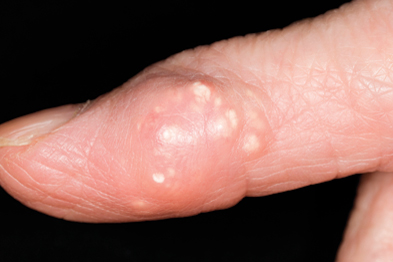
2- It may seem like a boring one but I have never ever actually seen GOUT in a patient before! This elderly came in with gout of the finger! It was looking very swollen and you were able to see yellow crystals underneath the skin. These were uric acid that had crystallized under the skin are are formed under certain conditions such as heat and dehydration which will effect the way the body metabolizes uric acid.
3- a 43 year old overweight male came into the surgery because he wanted to get checked over after an incidence he had on Tuesday afternoon. He said he had been walking his dog and he suddenly got really severe heart burn that radiated down his arm and shoulder and into the back of his throat. When the Dr asked him to described the pain he described it as "dull and heavy" and that was was "sweating buckets", the patient also had to take the following day off work because he was exhausted. The episode lasted for 10 minutes and the patient was convinced it was just bad heartburn.
BUT, from the patients history, smoker, obese and with a family history of heart attacks, and the description of the pain, dull, heavy on the chest radiating down his arm chest and shoulder, I thought the patient had suffered a heart attack and not realized.
The patient was sent for an urgent ECG in the next room and his ECG showed an ST ELEVATION, which is where the ST segment of the heart activity is abnormally high and is a sign of a heart attack, the T wave was also inverted, which is a sign that the Bundle of Hiss down the center of the heart has been damaged.
We had to straight away send the patient in an ambulance to hospital for an urgent angiogram to locate and treat the blockage in the heart!
IT WAS SUPER COOL
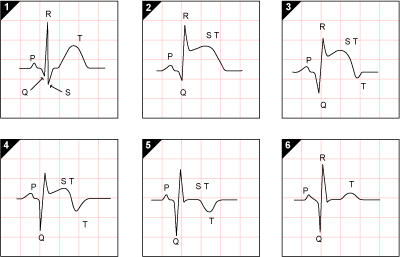
Image 2 shows a ST elevation
Image 5 shows a T wave depression
Wednesday, 17 July 2013
An Afternoon in Minor Ops
Now I wouldn't consider myself squeamish at all, I love a bit of blood, guts and pussy wounds, but when it comes to skin things, and skin tags and peeling skin, I feeling like vomiting. So it was my lucky day when I got to observe Minor Ops and all the delights of removing bits of skin haha!
Even though I wanted to vom, it was actually really interesting to watch, and I guess I got used to little bits of skin towards the end!
The majority of the cases in minor ops were the removal of a SEBORRHEIC KERATOSES, which is basically a non cancerous growth of the skin, the skin may have suffered a trauma or infection, causing the body to heal itself, and in the process the body may have produced a little bit too much skin, and so causing this little crusty lump on the surface of the skin. They tend to be removed when they irritate the patient, so if they catch on their clothes, and more commonly in women underneath the bra strap.
Here is a step by step of how the little lump was removed:
1- Inject the site with local anesthetic. The local anesthetic may sometimes be mixed with adrenaline, to prevent excessive bleeding from that area. You can clearly see the effect of the adrenaline on the skin because it blanches the skin (leaves a little white patch).

2- The lump of skin is scraped off using a curette, which is a surgical instrument used for scraping biological tissue. It is a little hand tool with a circular blade.
3- The wound is then cauterized using a hot needle to prevent the skin from re-growing and to stop the bleeding. The smell of burning flesh is horrid by the way! It stinks!
4- Vaseline and a dressing are applied to the wound - all sorted! Above is an example of one! (yums)
The second most common thing that came into minor ops were little round scars that needed to be removed because they bleed when they are caught and itch. This patient had a nice little round scar on her leg, that kind of looked like a little wart, but wasn't.
The process was different to the removal of the keratoses, and involved stitches!
1-The site was injected with local anesthetic.
2- The scar was then removed using a scalpel, ensuring to cut along the skin creases. If you were to cut against the skin crease the skin might not heal as well. 2 incisions were made on either side of the scar and the scar was then lifted up off the skin and cut away!
3- The wound was then stitched up using 6 stitches. It may seem unsual to have so many stitches for such a little wound, but due to the pressure in the legs from constantly standing etc, the skin as to be pulled as tight and as close together as possible or the wound may leak!
4- The patient was advised to rest the leg for a good 48 hours to ensure it healed properly.
So all in all a really interesting day, which as helped me to slightly get over my fear of pulling bits of skin off! Although I think I might feel different when I'm doing it myself, just watching other people do it makes me feel funny!
Even though I wanted to vom, it was actually really interesting to watch, and I guess I got used to little bits of skin towards the end!
The majority of the cases in minor ops were the removal of a SEBORRHEIC KERATOSES, which is basically a non cancerous growth of the skin, the skin may have suffered a trauma or infection, causing the body to heal itself, and in the process the body may have produced a little bit too much skin, and so causing this little crusty lump on the surface of the skin. They tend to be removed when they irritate the patient, so if they catch on their clothes, and more commonly in women underneath the bra strap.
Here is a step by step of how the little lump was removed:
1- Inject the site with local anesthetic. The local anesthetic may sometimes be mixed with adrenaline, to prevent excessive bleeding from that area. You can clearly see the effect of the adrenaline on the skin because it blanches the skin (leaves a little white patch).

2- The lump of skin is scraped off using a curette, which is a surgical instrument used for scraping biological tissue. It is a little hand tool with a circular blade.
3- The wound is then cauterized using a hot needle to prevent the skin from re-growing and to stop the bleeding. The smell of burning flesh is horrid by the way! It stinks!
4- Vaseline and a dressing are applied to the wound - all sorted! Above is an example of one! (yums)
The second most common thing that came into minor ops were little round scars that needed to be removed because they bleed when they are caught and itch. This patient had a nice little round scar on her leg, that kind of looked like a little wart, but wasn't.
The process was different to the removal of the keratoses, and involved stitches!
1-The site was injected with local anesthetic.
2- The scar was then removed using a scalpel, ensuring to cut along the skin creases. If you were to cut against the skin crease the skin might not heal as well. 2 incisions were made on either side of the scar and the scar was then lifted up off the skin and cut away!
3- The wound was then stitched up using 6 stitches. It may seem unsual to have so many stitches for such a little wound, but due to the pressure in the legs from constantly standing etc, the skin as to be pulled as tight and as close together as possible or the wound may leak!
4- The patient was advised to rest the leg for a good 48 hours to ensure it healed properly.
So all in all a really interesting day, which as helped me to slightly get over my fear of pulling bits of skin off! Although I think I might feel different when I'm doing it myself, just watching other people do it makes me feel funny!
Friday, 12 July 2013
More Summer Work Experience
Just a quick post about getting summer work experience.
I've literally just got an e-mail saying my interview for volunteering at a hospice went well and I can start in 2 weeks time! :) One of the resident Dr's that works there actually offered to have me shadow her and the rest of the doctors because I'm nearly a graduate and a bit older than a lot of the students that apply for work experience (the students that have just finished A-Levels).
So it is definitely worth send an e-mail to any local hospices in your area to see if they take on students for work experience! I'm sure volunteering in a hospice will be challenging and upsetting at times but I will let you know how it goes! :)
Remember, don't give up on getting work experience! Even if you are unable to get work experience shadowing a GP etc, it's not the end of the world, try your hand at befriending the elderly or young adults with learning difficulties, this will show the medical schools you can communicate effectively even in challenging circumstances. Look for any dementia day care centres that run arts and crafts sessions, or memory cafe's that need helpers.
The medical school want to see you have some kind of understanding how challenging a medical career can be, and that you have tried a wide range of volunteering roles, not that you have just observed a GP.
I've literally just got an e-mail saying my interview for volunteering at a hospice went well and I can start in 2 weeks time! :) One of the resident Dr's that works there actually offered to have me shadow her and the rest of the doctors because I'm nearly a graduate and a bit older than a lot of the students that apply for work experience (the students that have just finished A-Levels).
So it is definitely worth send an e-mail to any local hospices in your area to see if they take on students for work experience! I'm sure volunteering in a hospice will be challenging and upsetting at times but I will let you know how it goes! :)
Remember, don't give up on getting work experience! Even if you are unable to get work experience shadowing a GP etc, it's not the end of the world, try your hand at befriending the elderly or young adults with learning difficulties, this will show the medical schools you can communicate effectively even in challenging circumstances. Look for any dementia day care centres that run arts and crafts sessions, or memory cafe's that need helpers.
The medical school want to see you have some kind of understanding how challenging a medical career can be, and that you have tried a wide range of volunteering roles, not that you have just observed a GP.
Chronic Pain - How Do You Treat It?
There have been a few patients over the past few weeks come in with a complaint of chronic pain, wether it be all over the body, chronic neck pain or chronic headaches. The problem is how do you treat a pain that has no real cause?! (or one that we cant observe).
Patient A
Has had chronic headaches that last from 30seconds to 5 minutes that are felt around the temple region. A common cause of headaches is neck pain, however it's not the case here.
It could be Temporal Arthritis, which is an inflammatory disease of the blood vessels involving the large arteries of the head, but the patient did not have prominent temporal arteries on palpation of them.
So it was decided to prescribe the patient a drug to help with her chronic pain:
AMITRIPTYLINE - A drug that can be used for tension headaches, migraines and depression. Side effects include drowsiness and a dry mouth. But you would only take the drug at night due to it's sedating effects.
An interesting fact from the Dr - 99% of all headaches aren't brain tumours, and 90% of brain tumours don't present with headaches!
Patient B
Has suffered from chronic head, neck and shoulder pain for 15 years. She is currently taking
PREGABALIN - is an anticonvulsant drug as well as being used for neuropathic pain, and has been shown to be effective in treating chronic pain such as fibromyalgia. Side effects may include dizziness and drowsiness in some patients.
The patient has found that it hasn't cured her pain, just taken the edge off it.
So it was decided to change her treatment and try a different drug, this time it was DUALOXETINE, the patient will be slowly weened off Pregabalin over a week and then start taking the new drug to see if it helps! :)
Patient A
Has had chronic headaches that last from 30seconds to 5 minutes that are felt around the temple region. A common cause of headaches is neck pain, however it's not the case here.
It could be Temporal Arthritis, which is an inflammatory disease of the blood vessels involving the large arteries of the head, but the patient did not have prominent temporal arteries on palpation of them.
So it was decided to prescribe the patient a drug to help with her chronic pain:
AMITRIPTYLINE - A drug that can be used for tension headaches, migraines and depression. Side effects include drowsiness and a dry mouth. But you would only take the drug at night due to it's sedating effects.
An interesting fact from the Dr - 99% of all headaches aren't brain tumours, and 90% of brain tumours don't present with headaches!
Patient B
Has suffered from chronic head, neck and shoulder pain for 15 years. She is currently taking
PREGABALIN - is an anticonvulsant drug as well as being used for neuropathic pain, and has been shown to be effective in treating chronic pain such as fibromyalgia. Side effects may include dizziness and drowsiness in some patients.
The patient has found that it hasn't cured her pain, just taken the edge off it.
So it was decided to change her treatment and try a different drug, this time it was DUALOXETINE, the patient will be slowly weened off Pregabalin over a week and then start taking the new drug to see if it helps! :)
Thursday, 11 July 2013
Cutting Down On Unnecessary GP Appointments
From what I have seen during my work experience, GP's are under a lot of pressure a lot of time time, from consultants, to nurses and patients wanting time to speak to their GP. Many of the patients that have booked an appointment to see the GP have sometimes, not reeeally needed one. They just wanted to talk to the GP for reassurance, which is where the social and communication side of being a GP.
But in order to cut down on certain appointments, such as just coming in to have you BP taken, the surgery have bought out a new self check BP machine, where you pop in whenever you want, take 3 readings 2 minutes apart and hand your readings into reception, which will then go onto your record. If your BP needs attention (too high or low) then you will then be booked in to see the GP to discuss further options!
.JPG)
.JPG)
So I thought I would try it out on my break, the staff call it the cows backside, because it looks like your helping a cow give birth :)
There's the machine on the left and my 3 readings on the right which aren't to shabby!
But in order to cut down on certain appointments, such as just coming in to have you BP taken, the surgery have bought out a new self check BP machine, where you pop in whenever you want, take 3 readings 2 minutes apart and hand your readings into reception, which will then go onto your record. If your BP needs attention (too high or low) then you will then be booked in to see the GP to discuss further options!
.JPG)
.JPG)
So I thought I would try it out on my break, the staff call it the cows backside, because it looks like your helping a cow give birth :)
There's the machine on the left and my 3 readings on the right which aren't to shabby!
Subscribe to:
Posts (Atom)